Published December 24, 2025 | Updated December 24, 2025

By MedCourse
Useful, relevant, and interesting content for UK Junior Doctors.
About the Author

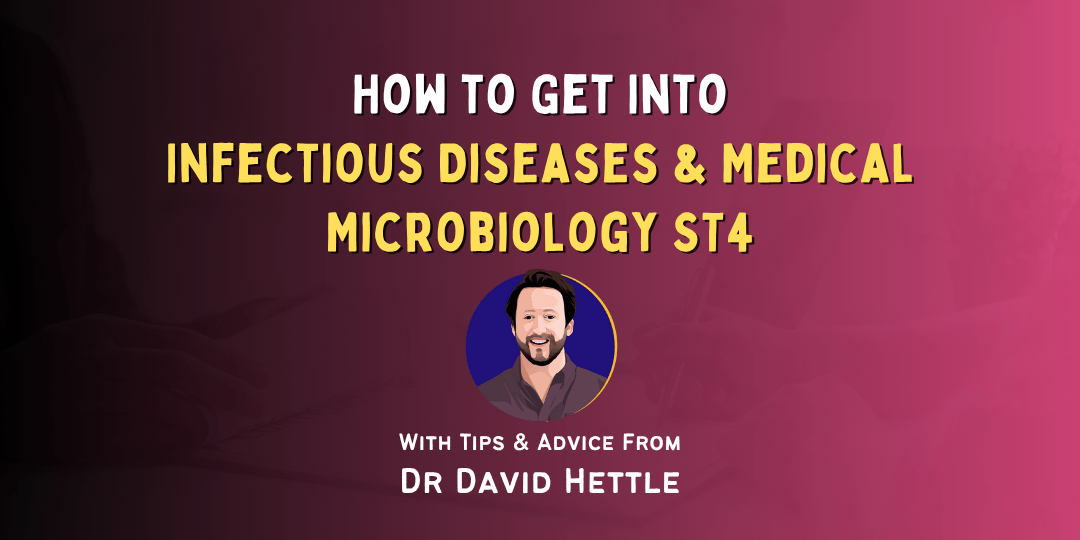
David Hettle, Infectious Diseases & Medical
Microbiology Specialty Registrar, Bristol (Severn Deanery).
I am a senior registrar (ST6) in Infectious Diseases & Medical Microbiology in Bristol, with a special interest in antimicrobial stewardship, TB, and global health. I have completed a Diploma in Tropical Medicine and Hygiene and FRCPath (Part 1) in Medical Microbiology. I am also involved in medical education as an Honorary Senior Teaching Fellow with North Bristol Academy of the University of Bristol, responsible for educational research and mentorship alongside clinical training. I have completed an MSc in Teaching and Learning for Health Professionals and am a national committee member for DMEG, the Developing Medical Educators’ Group of the Academy of Medical Educators.
Courses & Conferences to Attend
I had completed a Diploma in Tropical Medicine and Hygiene between the Foundation years and Core Training. I had also looked to attend relevant Infection Training days where possible, including Infectious Diseases symposia at the RCPE, and the Federation of Infection Sciences’ Annual Conference (a yearly UK infection conference hosted by one of three infection societies – British Infection Association, Microbiology Society, Healthcare Infection Society).
There are a few things to remember when applying for Combined Infection Training. Firstly, the programmes might incorporate ID, Microbiology, Virology, or Tropical Medicine. So, anything you have done/attended that can relate to any of these can be useful in the application process. Don’t forget the lab-based aspects of this, as most of us have had very little lab experience during training until this point. Also, a lot of the interviewing consultants may be Microbiology or Virology.
Conferences to consider include the FIS Annual Conference, BIA meetings (there are specific trainee days twice a year open to any doctors in training), and others are BSAC (focused on antimicrobial resistance and stewardship), Healthcare Infection Society (largely infection control-focused), or Microbiology Society (more lab-based than ID). But infection is also a part of nearly every other specialty, so if you have interests elsewhere as well, there is scope to attend infection aspects of e.g., respiratory conferences, like TB.


How to Maximise Your Portfolio
Make sure to review the national recruitment scoring system as early as you can; this means you can help to target your efforts. Of course, starting early with projects, research, QIPs, etc, is helpful, but also make the most of everything you’ve completed and see if there is an infection aspect you can draw from it. For example, even if you didn’t think a QIP you undertook early in training was particularly in infection, aspects may relate (e.g., cannula audits help combat line-related infections).
Take the chance to do taster weeks if you can. So don’t worry if you’ve only realised you like ID or Microbiology relatively late in training!
As not all locations have Infectious Diseases, having sought out a taster week looks good. Similarly, try and arrange with your local lab for some experience in your microbiology laboratory. Even if it is only for a few days, you show interest in the broad specialty of infection, and can talk about your awareness of the importance of a lab in the diagnosis of infection, which will support your application.
Ask, ask, ask if there are any projects you can become involved in – either consultants or current registrars in the specialty. They’ll all have ideas. Try to make sure anything you do become involved in helps you fill any gaps you know you have in your score/application so far. So, if you want a poster out of it, be up front about that and see if that is a realistic goal of the work. Also, case presentations in infection often have slots for oral presentations at conferences , so ask your local ID/Microbiology departments if they have any interesting cases that you could present in collaboration with them.
Making the Most of Your Day Job
Think about what you have already done – lots of time you have spent with patients in any specialty in foundation years and beyond will have had infection presentations. Any of these real-life scenarios might come up as clinical scenarios in an interview, such as the management of meningitis.
In almost any job you have, you will have many patients with infections, who are prescribed antibiotics. You can learn lots from each of these – infection syndromes, the broader investigations which may be requested, classes of antibiotics, and understanding antimicrobials’ spectrum of activity. There are often ward-level/hospital-level QIPs or audits ongoing (potentially on all wards) in liaison with pharmacy about antibiotic prescribing – such as duration recorded, indication. Check with ward teams or (antimicrobial) pharmacists, where you are, to find out if there is anything specific in any job role.
If you need to undertake clinics, e.g., as part of IMT, then go to infection clinics – either specifically ID clinics, or if these aren’t available to you, respiratory services may run TB clinics, or have respiratory infection clinics. Also, don’t forget HIV clinics, which may be run by GUM services locally, or hepatitis clinics (often gastro or ID). HIV clinics often don’t have many trainees at them, so they can be good opportunities to learn if you can make them work, and again, they may have projects you can get involved in.
Making the Most of Infectious Diseases & Medical Microbiology ST4 Placements
Let people know early that you are interested in the specialty if you’re starting a rotation in ID or Microbiology. Try to experience all aspects of what it would be like to be a registrar. It can be easy to be stuck on the ward, of course, but try to get to clinics, see referrals, go to journal clubs, and educational meetings. Also, try to learn everything you can about what you think the job is – it’s your best opportunity to learn if this is the specialty you thought it was, and if you want to do it long-term!
Again, have a look at the person specification for ID/Microbiology before you do the job, and try to explore aspects of the specialty that you feel you haven’t managed so far. For example, you probably have had experience in prescribing antibiotics, but less opportunity to see patients who have returned with fever from abroad or consider long-term management of patients with HIV.
Try to find aspects of ID or Microbiology that you can then take into your next specialty/rotation, whether good practice, research, or projects you can do.
What About Non-Infectious Diseases & Medical Microbiology ST4 Placements?
Think of the infection aspects of everyday practice in any specialty – antibiotic prescribing and diagnostic stewardship (i.e., sending the right infection tests on the right patient), for example. You can be excellent at these and encourage good practice in those around you, and even consider a QIP in the area, perhaps in collaboration with people on your current rotation and infection specialists (these include antimicrobial pharmacists).
Consider whether you have the chance to take taster weeks, especially time in the laboratory. Also, remember that a lot of the skills that you gain from any specialty, whether specifically medical or skills related to the teams you’re working in, will stand you in great stead for life as an infection specialist.