Published December 24, 2025 | Updated December 24, 2025

By MedCourse
Useful, relevant, and interesting content for UK Junior Doctors.
About the Author

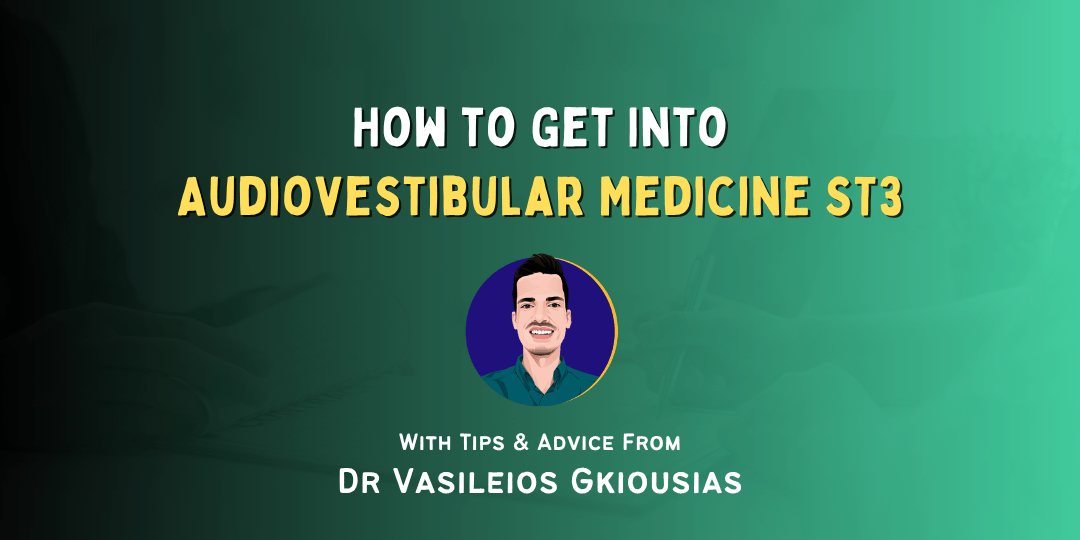
Vasileios Gkiousias, ST4 Audiovestibular Medicine, North West Deanery, Nottingham and Derby
Following completion of core surgical training focussing on ENT, I started higher specialist training in Audiovestibular Medicine at ST3 level. I have always been interested in the intricacies of the hearing and balance systems and really enjoy engaging in detailed conversations with patients and their families, as well as troubleshooting, whilst also working in the context of multidisciplinary teams, so it felt like the ideal switch.
Courses & Conferences to Attend
As part of my training in ENT, I attended several courses on surgical skills and management of the acutely unwell surgical patient, including BSS, ATLS, and CCrISP, but not exclusively focusing on Audiovestibular Medicine. Membership with ENT UK allowed me to keep up to date with developments in the field, as well as relevant conferences and courses of interest. Simultaneously, and having a keen interest in medical education, I completed an MSc in Health Professions Education and attended relevant courses, including “Teach the Teacher”.
One of the things that makes a career in Audiovestibular Medicine attractive is how diverse the backgrounds of its trainees are, including General Practice, General Internal Medicine, Paediatrics, and ENT, making any skillset from those backgrounds desirable and directly applicable to day-to-day practice as a Registrar. To that end, I would encourage any interested applicants to fulfil the requirements of their chosen training pathway prior to applying, while also trying to obtain new knowledge and skills in areas including education, management, and communication, which can be achieved through relevant accredited courses. The British Association of Audiovestibular Physicians (BAAP) website offers a comprehensive guide for those interested.



How to Maximise Your Portfolio
One of the limitations when trying to obtain experience in Audiovestibular Medicine is that, with it being a niche specialty, there are limited places across the UK where exposure can be attained at an FY1-CT3 level. As mentioned above, the BAAP website provides a list of practising Consultants, and it is worth trying to contact them to organise tasters. Having said that, and reflecting the multidisciplinary nature of the specialty, it would also be worth arranging some time in local Audiology and ENT departments, with both adult and paediatric teams, to try and get a better understanding of some facets of the specialty. Outside of these, it is of paramount importance to try and participate in audit/QIP and research opportunities as much as possible and attend conferences. Also, do not underestimate the wealth of experiences and knowledge that can be gained from working closely with allied healthcare professionals.
Making the Most of Your Day Job
The daily grind and demanding nature of certain specialties and associated rotas can undoubtedly feel draining and disheartening, but I would strongly encourage a positive and inquisitive mindset. Try to have discussions with more senior members of the team about patient cases and focus on addressing needs in a holistic manner. Multidisciplinary meetings can be great hubs for appreciating inputs from different team members and help shape a more global understanding of the complexities and intricacies inherent in patient care. Try to observe difficult conversations with patients and relatives and maximise your exposure rather than shying away from them, as Audiovestibular Medicine is a specialty that relies on strong communication. Acknowledge and try to accept that there are a lot of “grey areas” and uncertainty in clinical practice, as imbalance and disequilibrium are often multifactorial, and no single cause can be easily identified. Moreover, try and participate in clinical audits/QIPs, as well as teaching, as those will equip you with valuable skills for your future endeavours with colleagues and patients alike.
Making the Most of Audiovestibular Medicine ST3 Placements
It is unlikely that you will have clinical exposure in Audiovestibular Medicine at below ST3 level; however, given how diverse the training pathways are for getting into the specialty, immersing oneself into the day-to-day aspects of different specialties and pursuing educational opportunities as much as possible, both on a clinical and communication level, can only be beneficial.
What About Non-Audiovestibular Medicine ST3 Placements?
In Audiovestibular Medicine, you will be encountering an array of different clinical aspects from specialties, including General Medicine, Neurology, ENT, Neurodevelopmental Paediatrics, Ophthalmology, Psychology and Psychiatry, Immunology and Allergy, Genetics, as well as allied professions, including Audiology, Physiotherapy, and many more. It becomes obvious that no matter which specialty you end up in at a very junior level, there will always be valuable skills and knowledge to be gained, which will be directly transferable to Audiovestibular Medicine. Als,o try and appreciate the importance of work-life balance, which is another one of the benefits of the specialty.